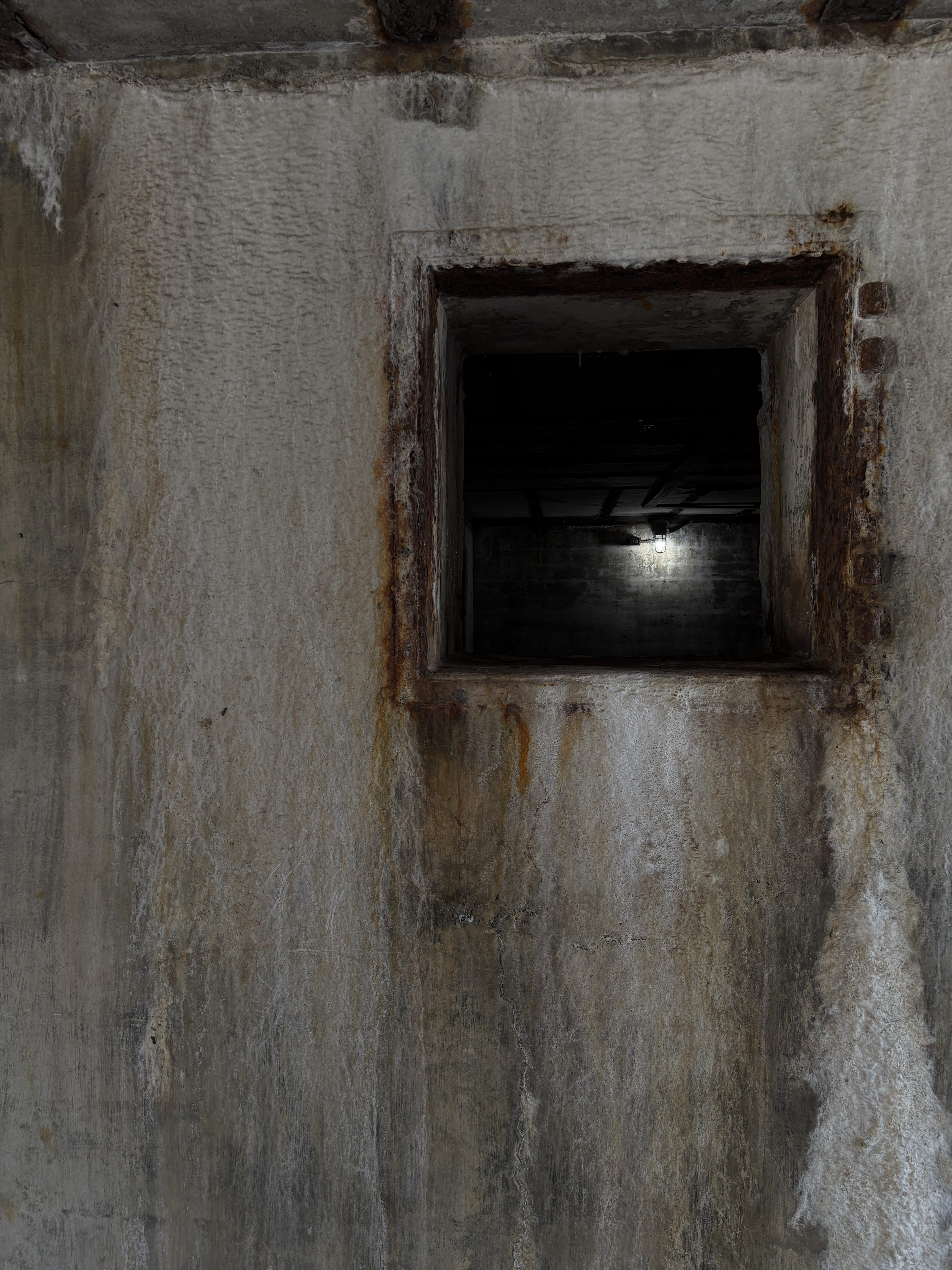
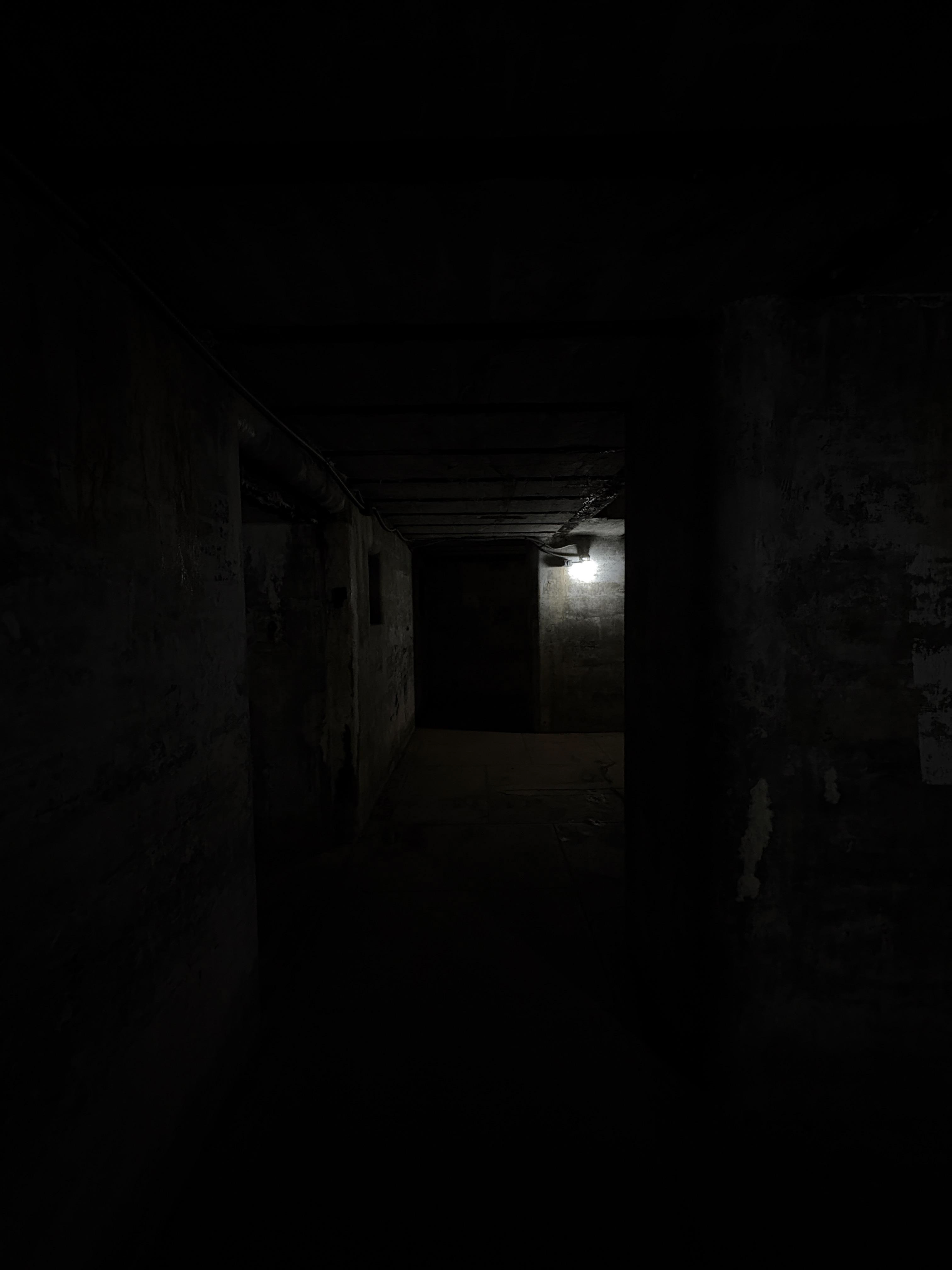
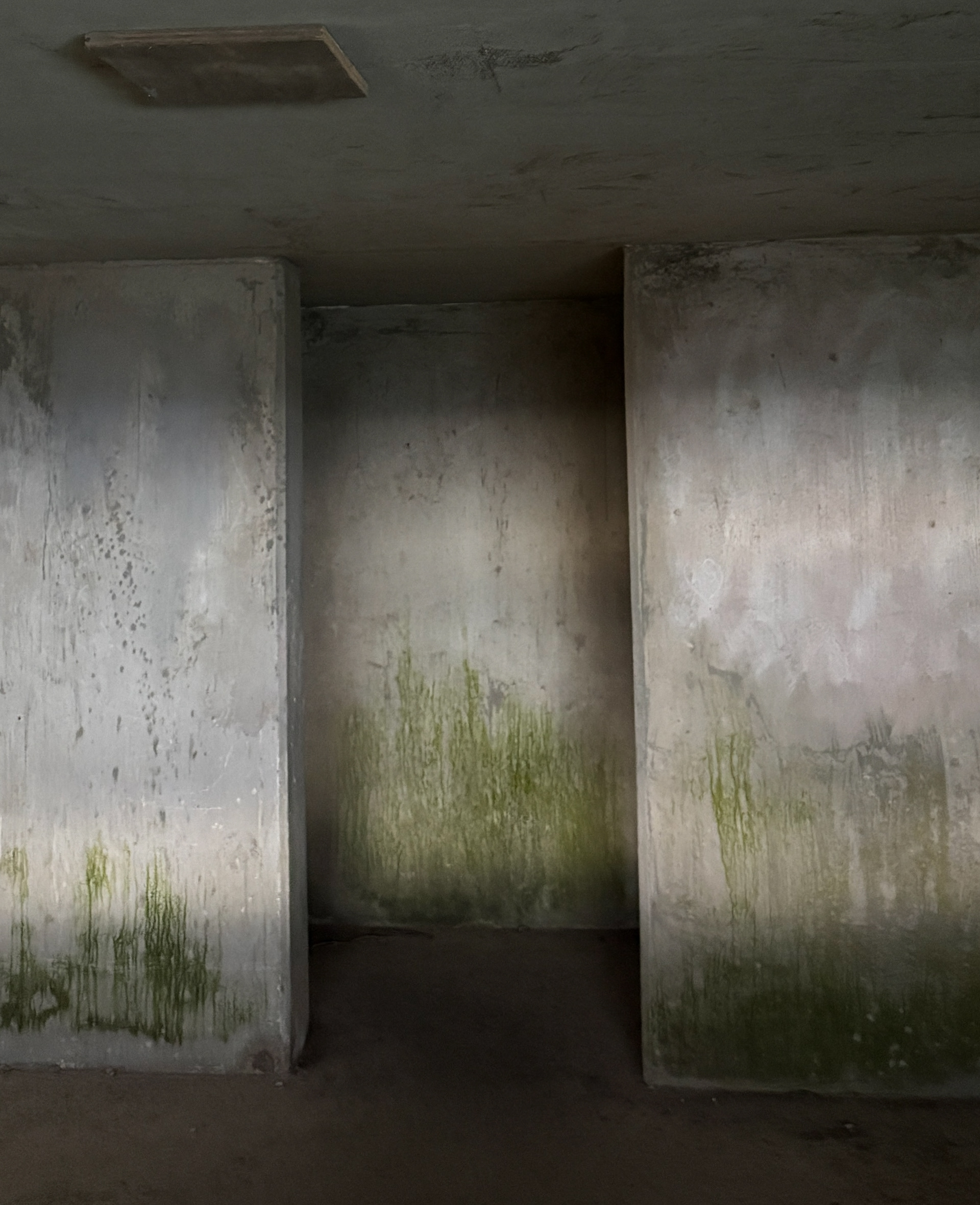
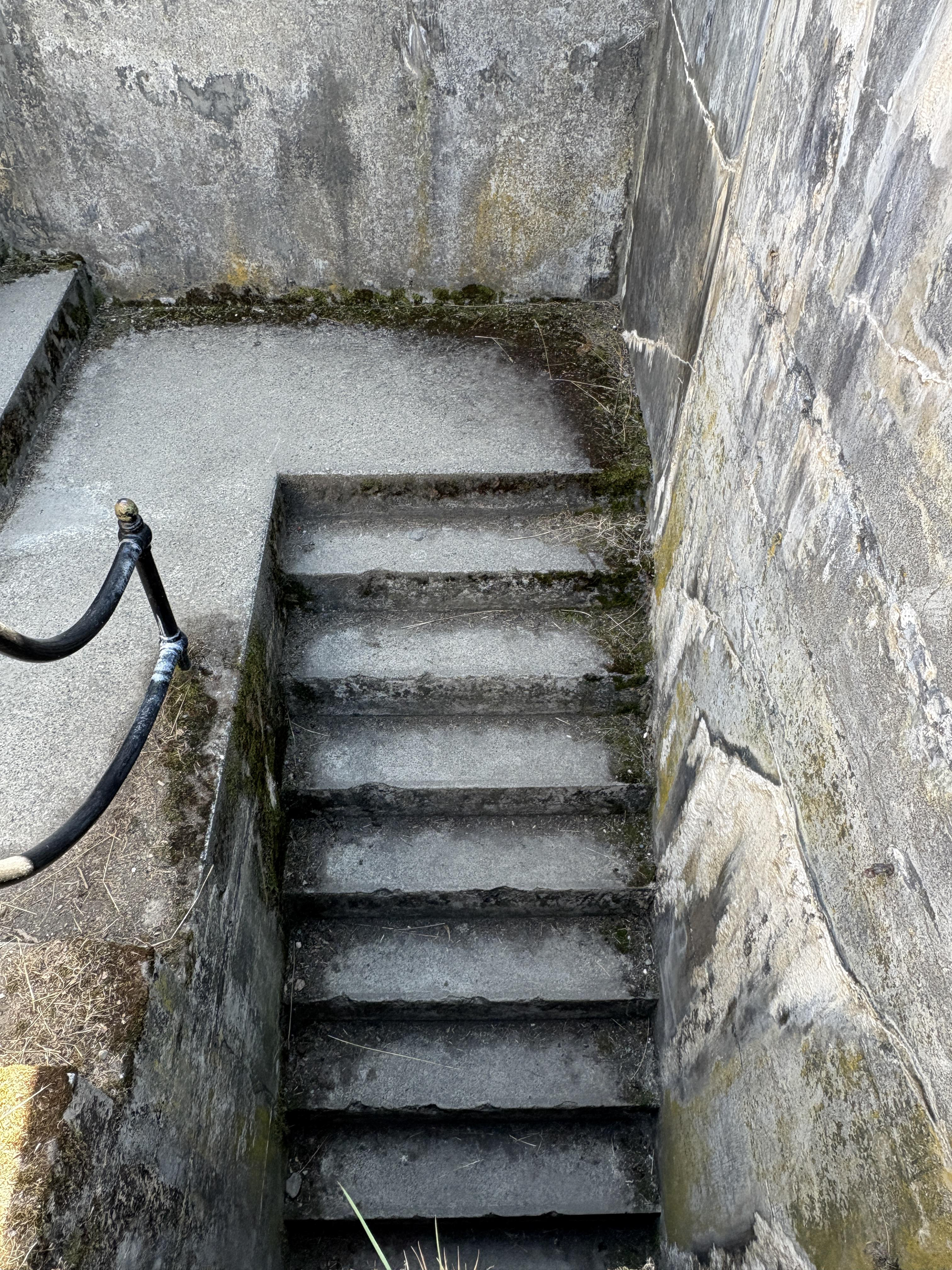
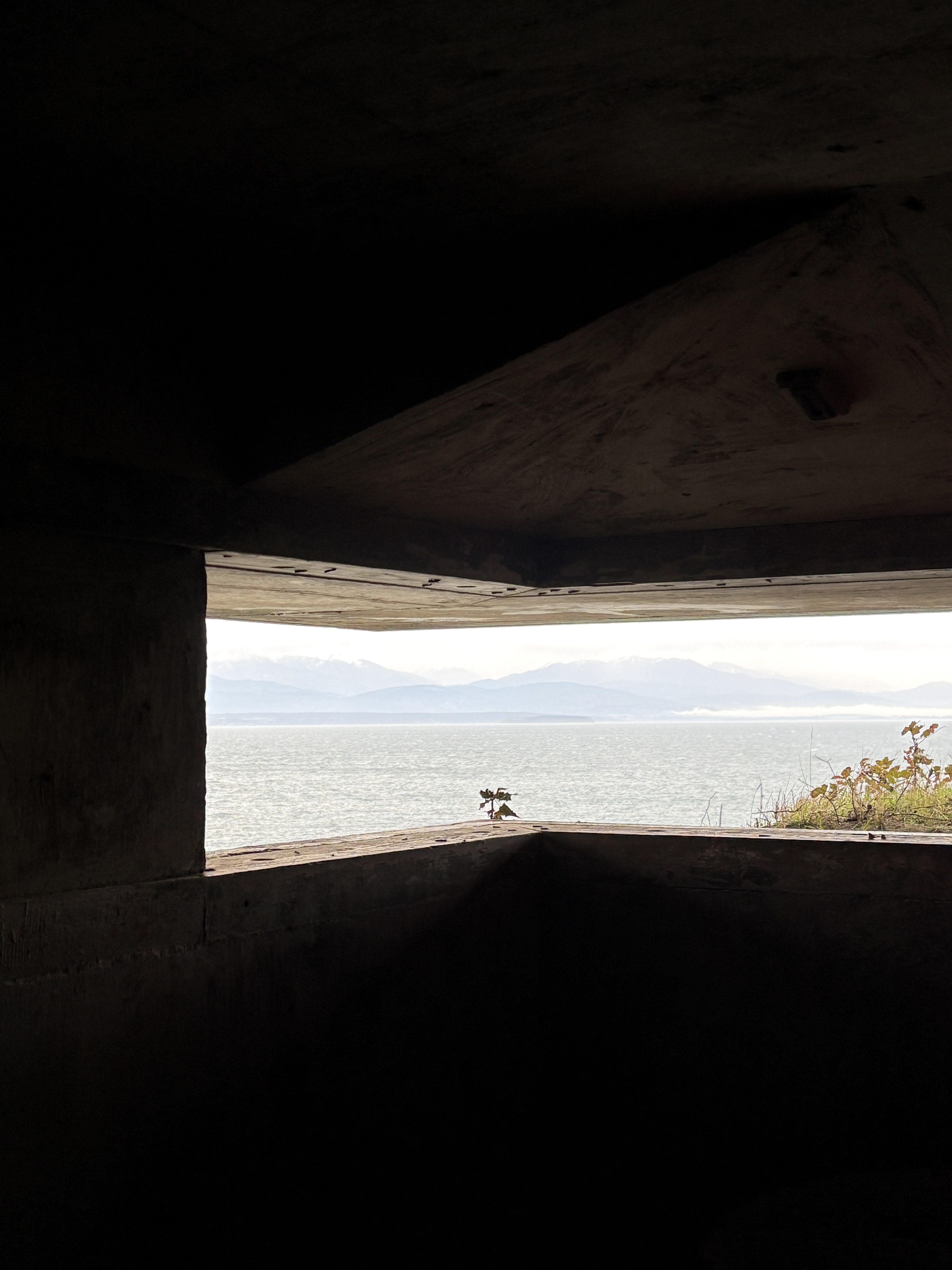
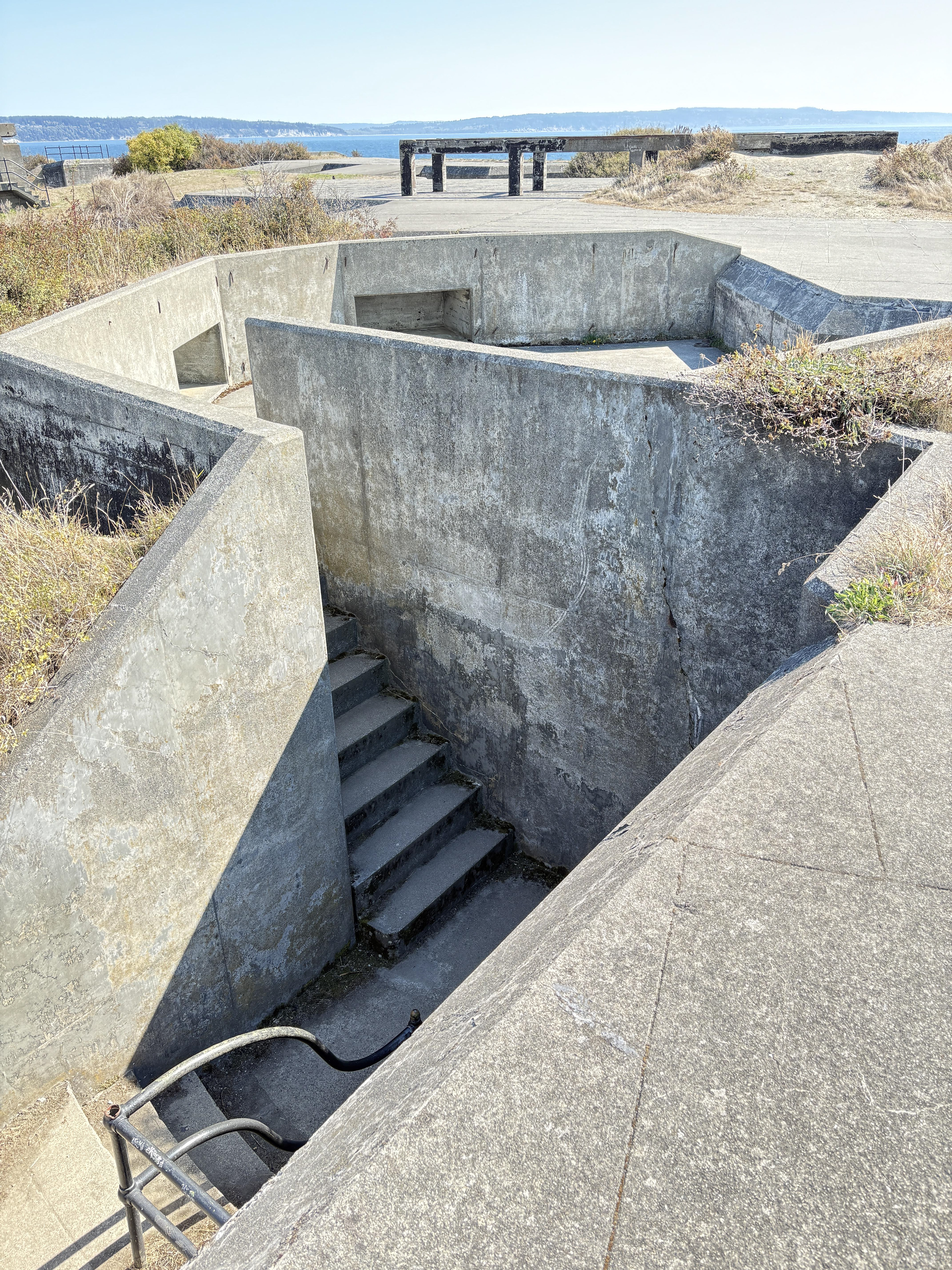
Robbie stated that the form did not possess a spacious inner volume, – one that expresses the fullness or the breath of the pot. On this, we agreed. When talking about my work, we continuously land on the subject of brutalism or maybe more generally the brutal. I believe this is partially because I have become obsessed with the old naval forts on Whidbey Island that have now been preserved as state parks. I would maybe even classify everything I have made here as vaguely site specific due to how much mental space these forts occupy in my mind. From the moment I stepped foot in Fort Casey state park here on the island I knew I wanted to photograph pots there – and this is why I claim these pots as at least slightly site specific because I know I have made everything with the lime stained concrete walls of Fort Casey in mind. While wandering the fortress of empty concrete buildings, I quickly fell in love with the liminal chill that subsumed me every time I found myself alone in a deep corner of the old fort. Full of ports and peeps the complex feels almost portal like. It wasn't a far leap for the pseudo interior spaces of the fort to permeate my dreams because the space presents borderline surreal activity when waking.
Occupying a space while a space occupies me
My whole life has been a progression of whatever space was possessing me at the time. I didn't understand the way materiality and material-to-human-connection ruled me until college where I was able to put terms to these sensations, study them, and ultimately take on the desire to replicate them. While it never occurred to me to design buildings (probably a mixture of self doubt and bashfulness held me back from thinking I was a building sized designer, plus pots have always held me in a similarly way– which leads me to believe it's about the material and not the scale of which it presents itself) I have come to understand the world through space. While that sounds incredibly vague and obvious it's a fundament that I had not fully grasped as I was experiencing these nameless enrapturing sensations. Now I can say the words surreal, dreamscape, brutalism, gestalt, etc and feel not necessarily closer to understanding this sensation, but at least enter a state where I have the confidence to explore these feelings as worthwhile endeavors ( and feel connected to the countless others who feel it too and were kind enough to write about it).
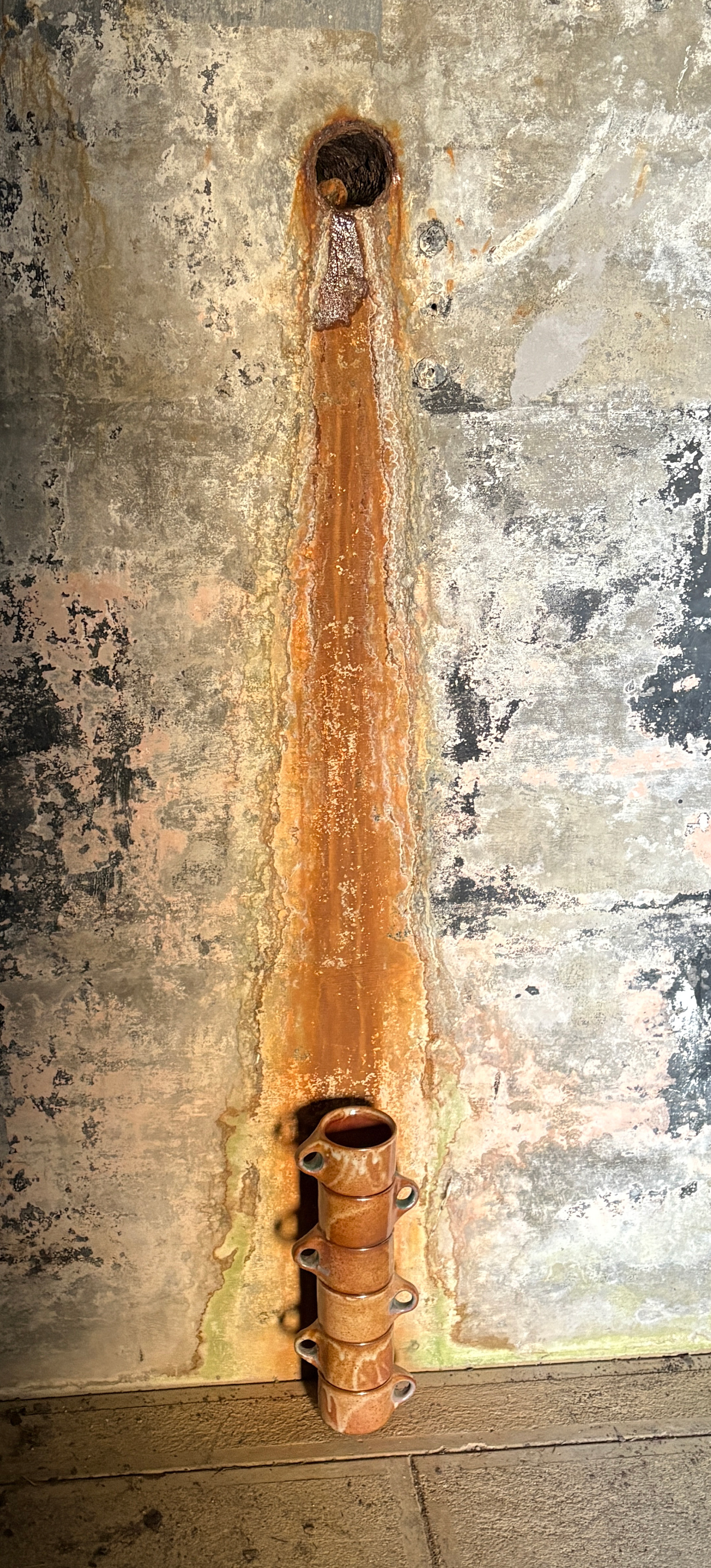
There's a spot in Fort Casey where a metal pipe comes out of the wall and, over time, has splayed out the most incredible mural of mineraly rusty deposits. It's pink, red, black, blue, green, and cream. I had a stack of cups glazed with shino and oribe that looked as though they were simply made for the spot (again, they kind of subliminally were) but this was a real moment of material connectivity for me, watching the iron on iron and copper on copper make out sesh between the ceramic and the concrete – both brought to life by the same elements. It was one of those simple but rare moments where the work makes sense and I felt vindicated in all of the fragments of thoughts that end up being the pots. Now this moment returned me to the major namable theme of my work that generally gets reduced to “architecture” and helped me understand why this word was continuously applied to my pots. I would never say that I am making pots about architecture because it's just not true. I could say that I am making pots that make me feel like buildings make me feel and I believe that is rooted in material connection. More on that later.
This is all related to tiles. I was asked frequently in my undergrad why do the tiles have to go on cups and the explanation that I am always grasping for could simply be that I can distribute cups. And if the cups possess the feeling that I have then maybe I can distribute the feeling– it all comes back to why I started with pots in the first place – the feeling (the big nameless) that I get when I hold one. Vague yes, but I am closer to having more to say on that now that I know it's about the feeling as opposed to the building or the cup.
Alas, my cylinders do not possess the big interior volume/the inside that is bigger than the outside. This is a class of pots that I love and appreciate but I would agree with Robbie’s sentiment that they do not do that thing. I reconcile this in two places: one – of course I can try to make them do that and that is an option and I can put the interior expression of the pot back on the table. OR two: the brutal cylinder calls to me every time because it makes me feel like I feel when I am in the concrete fortress, it's honest, unadorned, and complex in its simplicity just as is described in brutalist architecture. So that is why the breathless uncompromising cylinder keeps coming off of my wheel. As I mentioned, the first thing that gripped me about fort Casey was my urge to put pots in it, to adorn the unadorned. This is why I want my brutal breathless cylinders, so I can adorn them with my tiles. It's about the paradoxical urge to create blankness and a space for pattern and adornment – specifically pattern and adornment rooted in material association.
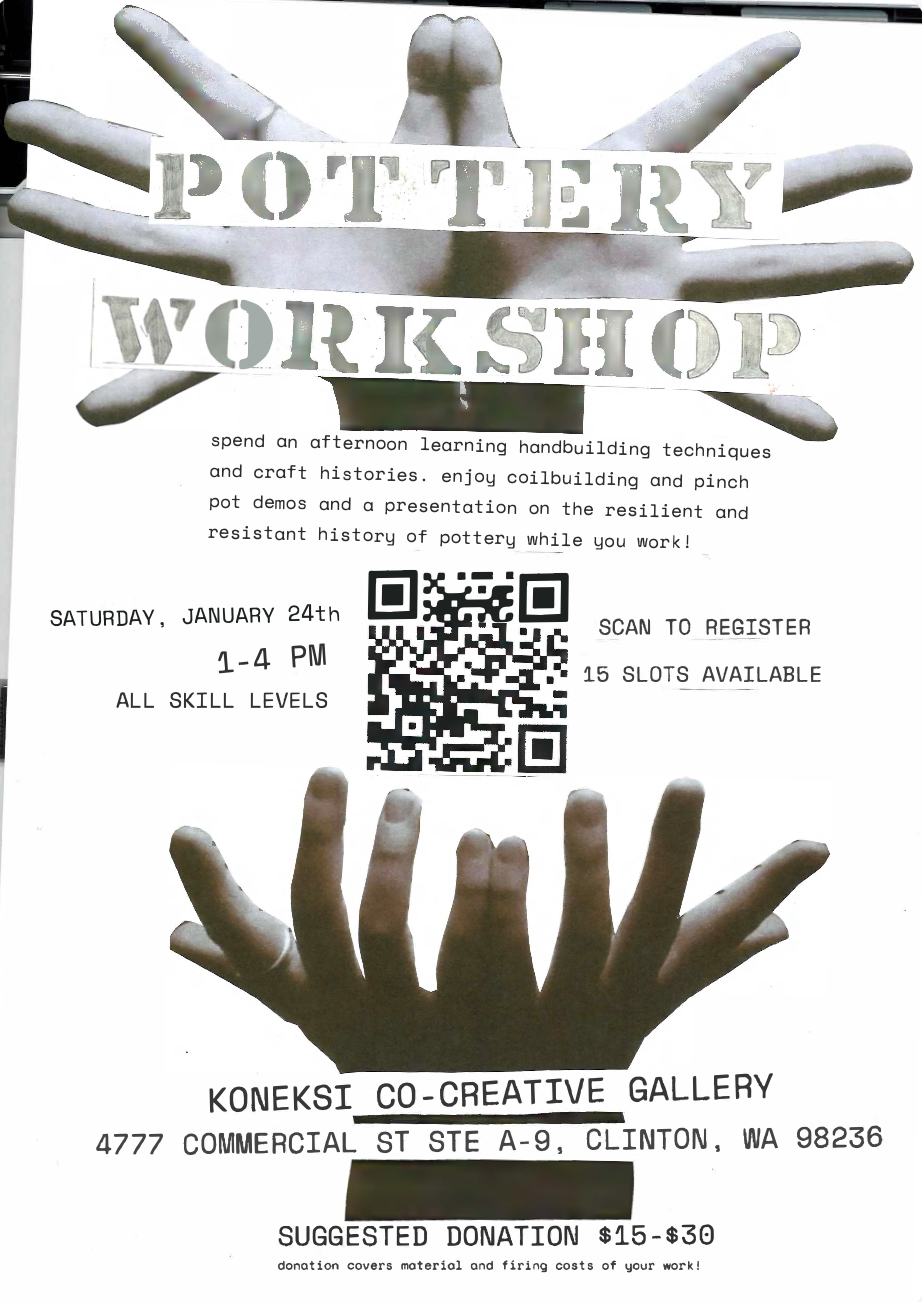
i'm teachin a workshop on whidbey!! register today!!